[The mission was crewed by Commander John Young, Lunar Module Pilot Charles Duke and Command Module Pilot Ken Mattingly. Launched from the Kennedy Space Center in Florida on April 16, 1972, Apollo 16 experienced a number of minor glitches en route to the Moon. These culminated with a problem with the spacecraft’s main engine that resulted in a six-hour delay in the Moon landing as NASA managers contemplated having the astronauts abort the mission and return to Earth, before deciding the problem could be overcome. Although they permitted the lunar landing, NASA had the astronauts return from the mission one day earlier than planned.
After flying the Lunar Module to the Moon’s surface on April 21, Young and Duke spent 71 hours—just under three days—on the lunar surface, during which they conducted three extravehicular activities or moonwalks, totaling 20 hours and 14 minutes. The pair drove the lunar rover, the second used on the Moon, for 26.7 kilometers (16.6 mi). On the surface, Young and Duke collected 95.8 kilograms (211 lb) of lunar samples for return to Earth, including Big Muley, the largest Moon rock collected during the Apollo missions. During this time Mattingly orbited the Moon in the command and service module (CSM), taking photos and operating scientific instruments. Mattingly, in the command module, spent 126 hours and 64 revolutions in lunar orbit.[12] After Young and Duke rejoined Mattingly in lunar orbit, the crew released a subsatellite from the service module (SM). During the return trip to Earth, Mattingly performed a one-hour spacewalk to retrieve several film cassettes from the exterior of the service module. Apollo 16 returned safely to Earth on April 27, 1972].
thomasottoson on
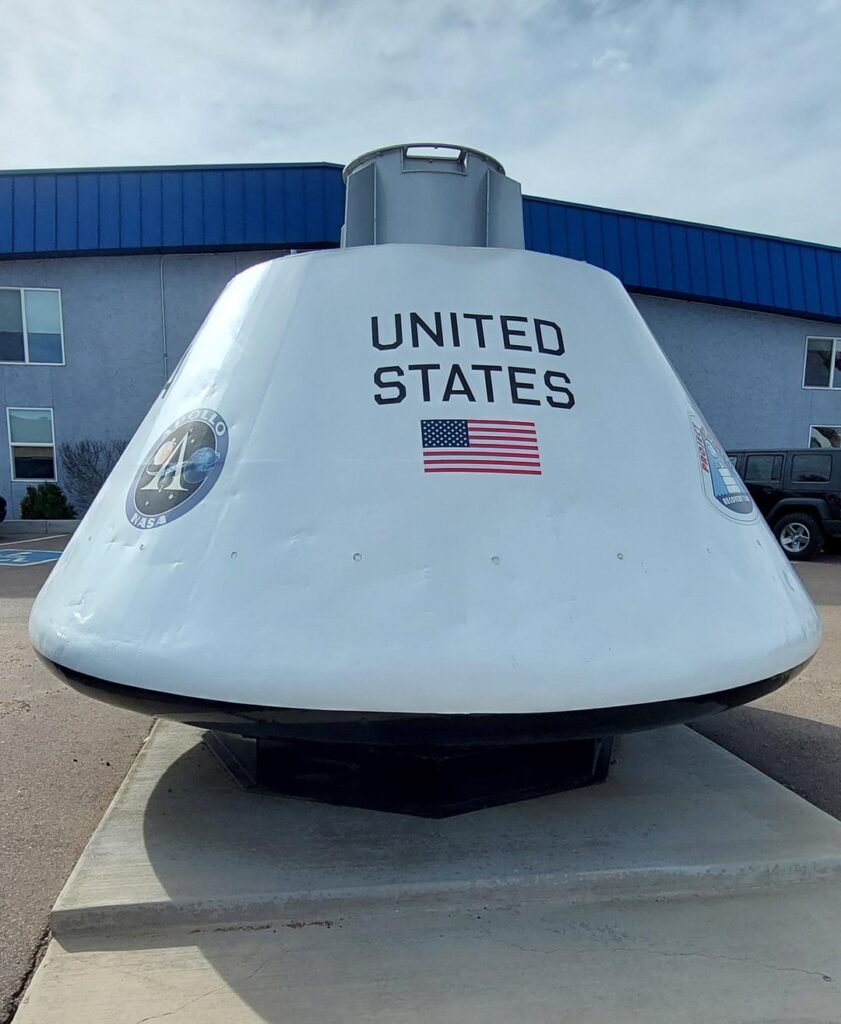
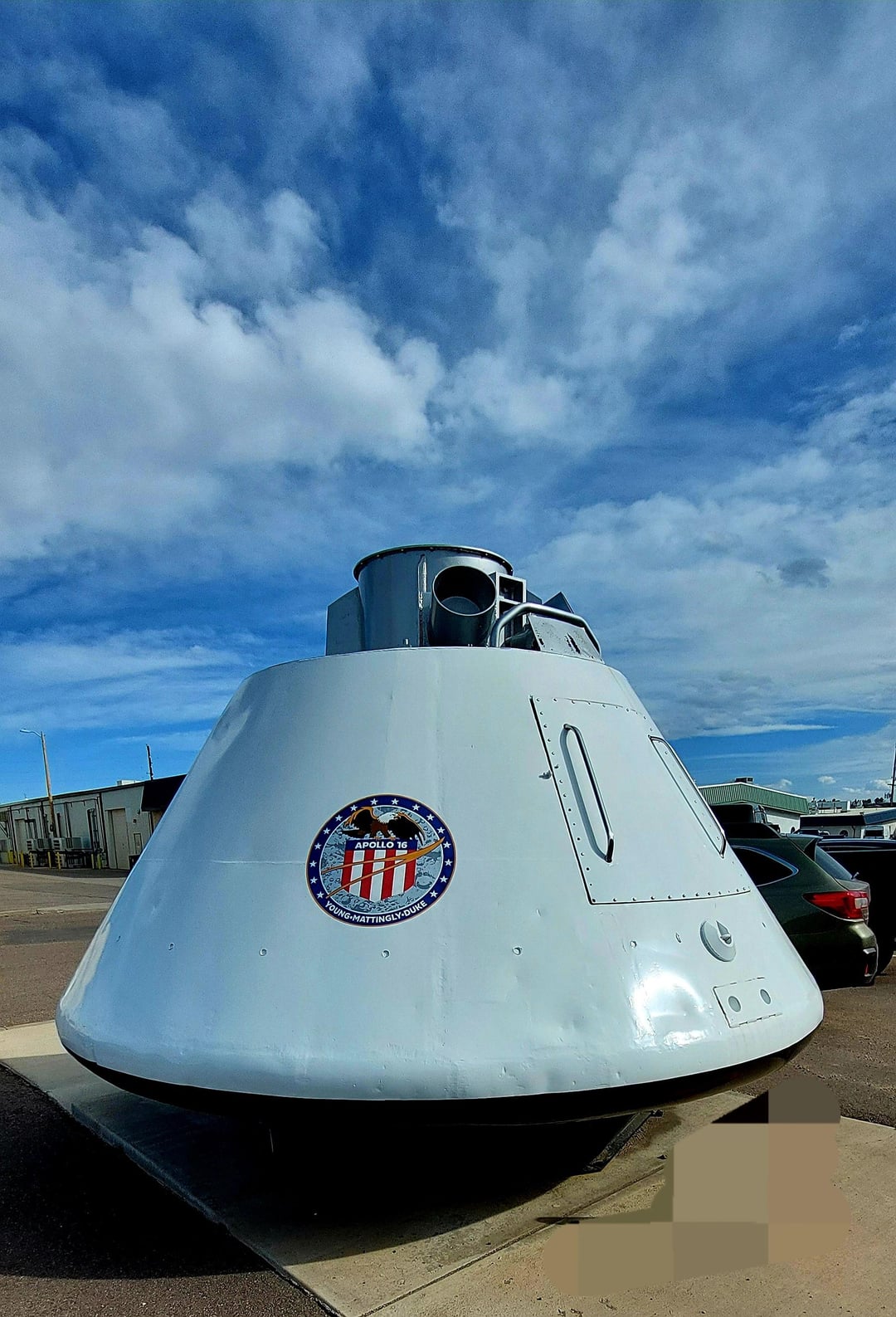
Hope it doesn’t burst your bubble, but that’s not the actual capsule


4 Comments
[The mission was crewed by Commander John Young, Lunar Module Pilot Charles Duke and Command Module Pilot Ken Mattingly. Launched from the Kennedy Space Center in Florida on April 16, 1972, Apollo 16 experienced a number of minor glitches en route to the Moon. These culminated with a problem with the spacecraft’s main engine that resulted in a six-hour delay in the Moon landing as NASA managers contemplated having the astronauts abort the mission and return to Earth, before deciding the problem could be overcome. Although they permitted the lunar landing, NASA had the astronauts return from the mission one day earlier than planned.
After flying the Lunar Module to the Moon’s surface on April 21, Young and Duke spent 71 hours—just under three days—on the lunar surface, during which they conducted three extravehicular activities or moonwalks, totaling 20 hours and 14 minutes. The pair drove the lunar rover, the second used on the Moon, for 26.7 kilometers (16.6 mi). On the surface, Young and Duke collected 95.8 kilograms (211 lb) of lunar samples for return to Earth, including Big Muley, the largest Moon rock collected during the Apollo missions. During this time Mattingly orbited the Moon in the command and service module (CSM), taking photos and operating scientific instruments. Mattingly, in the command module, spent 126 hours and 64 revolutions in lunar orbit.[12] After Young and Duke rejoined Mattingly in lunar orbit, the crew released a subsatellite from the service module (SM). During the return trip to Earth, Mattingly performed a one-hour spacewalk to retrieve several film cassettes from the exterior of the service module. Apollo 16 returned safely to Earth on April 27, 1972].
Hope it doesn’t burst your bubble, but that’s not the actual capsule
That isn’t the Apollo 16 capsule. [Here it is](https://www.reddit.com/r/space/comments/1aj2ewp/a_man_and_his_spaceship_50_years_later_charlie/) at the US Space and Rocket Center in Huntsville, AL, with Charlie Duke standing before it some 50 years after his flight on it (he was the LMP).
This is one of many tests capsule. This one was recently restored by SAS.